
Views: 0 Author: Site Editor Publish Time: 2025-12-22 Origin: Site


Choosing the right centrifugal blower fan for your system is crucial for maintaining efficient airflow and ensuring that your system operates smoothly. The right fan can improve system performance, reduce energy consumption, and extend the life of your equipment. This article will guide you through the important factors to consider when selecting a centrifugal blower fan, including airflow requirements, environmental considerations, motor options, and more. By understanding these factors, you can make an informed decision and choose the best fan for your specific application.
Before you select a centrifugal blower fan, it is essential to understand the specific needs of your system. The right fan is more than just a tool to move air; it must also be able to handle the conditions in which it will be used. The performance of your system, energy consumption, and overall longevity can all be affected by the type of fan you choose.
For example, selecting a fan that can provide the required airflow and pressure for your system will ensure optimal performance. If the fan does not meet the system's demands, it may lead to inefficiencies, higher energy costs, and potentially premature failure. Understanding the requirements of your system is the first step in choosing the right centrifugal blower fan for the job.
One of the most critical aspects of selecting the right centrifugal blower fan is understanding your airflow and pressure needs. Airflow is typically measured in cubic feet per minute (CFM), and it is essential to know how much air your system needs to move. Systems with long ductwork or those that require air to be pushed through filters, for example, will require higher airflow capacities.
In addition to airflow, static pressure is another important factor. Static pressure refers to the resistance the air faces as it moves through the system, and centrifugal blower fans are designed to generate higher static pressure compared to other fan types like axial fans. High static pressure capabilities make centrifugal blowers ideal for systems where air must be moved through long ducts, filters, or other restrictive components.
To determine the airflow and pressure requirements for your system, you can measure the resistance to airflow and calculate the necessary fan performance. If you are unsure, consulting a professional or using online calculators can help you select a fan that matches your system's needs.
The environment in which your centrifugal blower fan will operate is another key consideration. Factors such as temperature, humidity, and the presence of contaminants can all influence the fan's performance and longevity. For example, if the fan will be used in a high-temperature environment, you may need to choose a fan with a motor that can withstand heat and prevent overheating.
The air quality and properties, such as moisture and contaminants, are also important to consider. For environments where the air is dirty or corrosive, choosing a fan with durable materials and a protective motor enclosure is essential. Heko centrifugal blower fans are designed with such considerations in mind, offering durability and protection against challenging operating conditions.
Additionally, fans used in hazardous environments may need to comply with specific safety standards or certifications. Choosing a fan that meets these requirements will ensure that your system operates safely and efficiently.
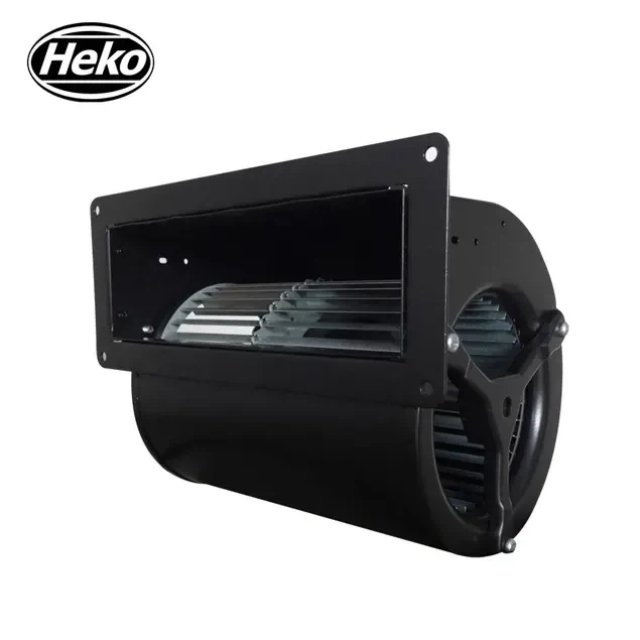
Centrifugal blower fans come in various types, each suited for different applications. The impeller design, in particular, plays a crucial role in determining how efficiently the fan can move air. Centrifugal blower fans typically come with backward curved, forward curved, or radial impellers. Each impeller type has its own strengths, and selecting the right one depends on the specific needs of your system.
Backward curved impellers are ideal for high static pressure applications and are more energy-efficient. These impellers are often used in systems with high resistance, such as air filtration or exhaust systems.
Forward curved impellers are better suited for applications that require high airflow but lower static pressure. These fans are often used in general ventilation systems.
Radial impellers provide a balance between airflow and pressure and are suitable for a wide range of applications.
For systems with high static pressure demands, such as HVAC or industrial processes, selecting a centrifugal blower fan with a backward curved impeller is recommended. If airflow is more critical, forward curved impellers may be the better choice.
The motor and drive system are essential components in determining the efficiency and performance of your centrifugal blower fan. Motors are typically available in both AC (alternating current) and DC (direct current) options. AC motors are commonly used in industrial applications where high power is required, while DC motors are more energy-efficient and can be used in systems where power consumption is a priority.
When choosing a motor, it is important to consider not only the power requirements but also the energy efficiency. Fans with EC brushless motors, like those used in Heko centrifugal blower fans, offer superior energy efficiency and a longer lifespan. These motors consume less power and require less maintenance, making them ideal for applications where energy savings and low operational costs are a concern.
In addition to motor types, consider the need for variable speed control. Many systems require fans to operate at different speeds depending on the conditions. Fans with variable speed capabilities can be adjusted to provide the optimal airflow, which can help save energy and reduce wear and tear on the system.
When selecting a centrifugal blower fan, it is important to consider the size and space constraints of your system. Fans come in various sizes, and choosing one that fits within your available space is essential for ensuring easy installation and optimal performance. Heko centrifugal blower fans are available in a wide range of sizes, making it easier to find a fan that fits your system's requirements.
Noise is another important factor, especially in environments where low noise levels are necessary, such as hospitals or offices. While centrifugal fans are generally quieter than axial fans, the size and design of the fan can influence its noise output. Ensuring that the fan operates within the acceptable noise levels for your application will contribute to a more comfortable and productive environment.
Maintenance is also a key consideration. Some fans require more frequent maintenance than others, depending on the motor type, impeller design, and operating conditions. Heko centrifugal blower fans are designed for easy maintenance and long-lasting performance, reducing the need for frequent repairs and downtime.
Heko's centrifugal blower fan series offers a wide range of options to meet your system's needs. With sizes ranging from 97mm to 180mm for single inlet models, and 133mm and 146mm for double inlet models, there is a fan for virtually every application. Whether you're working with an HVAC system, industrial process, or specialized application, Heko's centrifugal fans provide the airflow and pressure you need.
The ability to choose between AC and DC input options gives you flexibility, and the use of 3-core EC brushless external rotor motors ensures energy efficiency and durability. These fans are designed to handle high static pressure environments while maintaining consistent airflow, making them a reliable choice for any system.
Selecting the right centrifugal blower fan is crucial for optimizing the performance and efficiency of your system. By considering factors such as airflow and pressure requirements, operating conditions, motor options, and fan design, you can ensure that your system runs smoothly and efficiently. Centrifugal blower fans offer unique advantages, particularly in systems where high static pressure and controlled airflow are essential.
If you are looking for a centrifugal blower fan that delivers high performance, energy efficiency, and long-lasting durability, Heko centrifugal blower fans are the ideal choice. Contact us today to learn more about our products and how they can benefit your system.
What are centrifugal blower fans used for?
Centrifugal blower fans are used in applications requiring high static pressure, such as HVAC systems, industrial processes, and dust collection systems. They provide stable airflow even in systems with resistance.
How do I choose the right centrifugal blower fan for my system?
To choose the right fan, you need to consider factors such as airflow (CFM), static pressure requirements, the operating environment, motor type (AC or DC), and the size and installation space available.
What is the difference between AC and DC motors in centrifugal blower fans?
AC motors are typically used in high-power industrial applications, while DC motors are more energy-efficient and suitable for systems where power consumption is a priority.
Why should I choose Heko centrifugal blower fans?
Heko centrifugal blower fans offer a wide range of sizes, input options, and durable EC brushless motors, making them ideal for demanding applications. They provide reliable performance, energy efficiency, and easy maintenance.


