
Views: 0 Author: Site Editor Publish Time: 2025-12-29 Origin: Site


Air movement plays a vital role in maintaining the efficiency of various industrial processes, whether it's in HVAC systems, cooling applications, or ventilation systems. Among the many types of fans used in industries today, Centrifugal Blower Fans are recognized for their ability to provide high static pressure and controlled airflow, making them indispensable in several industrial environments. In this article, we will explore how Centrifugal Blower Fans differ from other fan types, particularly axial fans, and why they are often the preferred choice for demanding applications. We will also highlight the advantages of using DC Centrifugal Blower Fans, which combine traditional centrifugal fan benefits with the energy-efficient features of DC technology.
To better understand why Centrifugal Blower Fans excel in certain applications, it's important to first examine how they operate in comparison to other fan types.
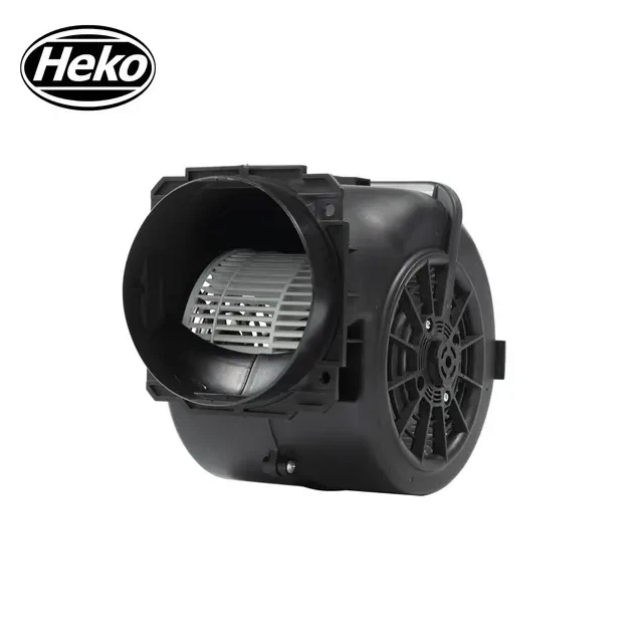
A Centrifugal Blower Fan works by drawing air into the center of the fan and pushing it outward at a 90-degree angle. This airflow is generated by a rotor or impeller, which spins rapidly to force air through a volute or diffuser. The centrifugal force causes the air to move outward, creating a high-pressure output that can overcome significant resistance. This feature makes centrifugal fans ideal for environments where high static pressure is required, such as air conditioning systems, ventilation systems, and air purification processes.
In contrast, an Axial Fan operates by pulling air along the axis of the fan's rotation, directing airflow parallel to the fan's shaft. This design is particularly effective for applications requiring high airflow rates but relatively low pressure, such as ventilation in large open spaces. While axial fans are more efficient in terms of airflow, they are not well-suited for systems with significant airflow resistance.
These fundamental design differences play a significant role in determining which fan is most suitable for a given application. Centrifugal Blower Fans are preferred in systems requiring high pressure and controlled airflow, while Axial Fans excel in applications that demand high volumes of air without significant resistance.
When comparing Centrifugal Blower Fans to axial fans, the most important difference is in their ability to generate pressure and manage airflow.
Axial Fans are typically more suited for applications where the airflow requirement is high but the system resistance is low. In these scenarios, axial fans can move large volumes of air with minimal energy expenditure, making them ideal for tasks such as cooling and ventilation in large, open areas.
On the other hand, Centrifugal Blower Fans are designed to generate significantly higher static pressure. This means they can push air through narrow ducts, filters, or other components that create resistance in the system. The ability to overcome this resistance with ease makes centrifugal fans the preferred choice in situations where high static pressure is needed to maintain airflow, such as in air conditioning systems, filtration units, and industrial cooling systems.
The increased static pressure capability of Centrifugal Blower Fans allows them to function effectively in complex or high-resistance systems, such as those with intricate ductwork or restrictive filters. In these environments, centrifugal fans provide better airflow stability, reducing the risk of performance degradation due to pressure drops.
In today’s world, energy efficiency is a top priority for industries seeking to reduce operational costs and environmental impact. Let’s explore how Centrifugal Blower Fans perform in terms of energy consumption and efficiency, particularly in comparison to axial fans.
Axial fans are generally more energy-efficient when used in low-pressure systems because they are designed for high-flow, low-resistance environments. Their simpler design results in less friction and less energy required to move air, making them ideal for large open areas or situations where pressure resistance is minimal.
Centrifugal Blower Fans, however, are specifically engineered for high-static-pressure applications. Despite the increased resistance in these systems, centrifugal fans can still achieve a high level of efficiency, particularly when paired with DC motor technology. The use of DC motors allows for precise control of fan speed, ensuring that energy is used optimally. DC Centrifugal Blower Fans are particularly efficient because their speed can be adjusted to match the system’s demand, avoiding energy waste.
By using DC Centrifugal Blower Fans, industries can benefit from lower energy consumption and long-term savings. This energy efficiency is especially crucial in applications where the fan runs continuously, such as in air filtration or ventilation systems.
Noise and size are also important factors to consider when selecting a fan for industrial applications. While axial fans tend to be smaller and lighter, they are often noisier due to their design.
Due to their simple design, Axial Fans are typically more compact and lighter than centrifugal fans. However, this design can lead to higher noise levels, especially at high speeds or in confined spaces. Axial fans can be disruptive in environments where noise control is essential, such as clean rooms or office buildings.
In contrast, Centrifugal Blower Fans are generally larger and heavier due to their more complex design. However, these fans are better at controlling noise levels because their airflow is distributed more evenly and is less turbulent. The design of the fan housing and the pressure output also help minimize vibration and noise, making Centrifugal Blower Fans a better choice for industrial environments where noise levels must be kept to a minimum.
Moreover, the versatility in installation is another benefit of Centrifugal Blower Fans. They can be installed in a variety of configurations, including in-line or corner-mounted systems, depending on the space requirements and airflow needs of the application.
Centrifugal Blower Fans excel in specific applications where high static pressure and precise airflow control are required. Below are a few scenarios where these fans are the preferred choice:
HVAC Systems: In HVAC systems, where airflow needs to be directed through long ducts and filters, Centrifugal Blower Fans offer the necessary pressure to maintain a steady airflow while overcoming resistance.
Industrial Drying and Cooling: Centrifugal Blower Fans are commonly used in drying systems, such as in the food processing and pharmaceutical industries, where stable airflow is crucial to ensure consistent drying.
Air Purification Systems: In clean room environments, where air must be filtered and purified without contaminating the environment, Centrifugal Blower Fans provide controlled airflow with minimal noise and vibration, making them ideal for these sensitive applications.
While axial fans can be effective in high-flow, low-pressure systems, they are not well-suited for applications where high static pressure is necessary. In systems like HVAC, industrial drying, or air purification, axial fans may not provide the required pressure and may struggle to maintain stable airflow under resistance.
When comparing DC Centrifugal Blower Fans with other common fan types, such as Axial Fans and Inline Fans, several factors must be considered, including static pressure, lifespan, maintenance, and control features.
While Axial Fans are designed for applications with minimal resistance, Centrifugal Blower Fans are far superior when it comes to overcoming high resistance and providing consistent airflow. Centrifugal Blower Fans also tend to have a longer lifespan due to their robust design, which minimizes wear and tear in high-resistance applications.
Inline fans are generally smaller and quieter than centrifugal fans, but they lack the ability to handle high-pressure systems. DC Centrifugal Blower Fans offer better performance in complex systems and are more effective in scenarios where airflow needs to be directed with precision.
When it comes to industrial airflow solutions, choosing the right fan is crucial to maintaining operational efficiency and reducing long-term costs. While Axial Fans may be suitable for high-flow, low-pressure systems, Centrifugal Blower Fans offer superior performance in high-resistance applications. With the added benefits of DC motor technology, Centrifugal Blower Fans provide exceptional control, energy efficiency, and reliability. For industries requiring precise airflow management, Centrifugal Blower Fans are undoubtedly the smarter investment.
For more information on how DC Centrifugal Blower Fans can enhance your industrial airflow systems, contact us at Heko Electronic (Suzhou) Co., Ltd.
1. What makes Centrifugal Blower Fans different from Axial Fans?
Centrifugal Blower Fans generate high static pressure, making them ideal for systems with high resistance, while Axial Fans provide high airflow at low pressure, suited for low-resistance environments.
2. How does DC technology improve Centrifugal Blower Fans?
DC technology allows for more precise speed control, energy savings, and longer fan life, making DC Centrifugal Blower Fans more efficient and reliable in industrial applications.
3. Can Centrifugal Blower Fans be used in clean rooms?
Yes, Centrifugal Blower Fans are ideal for clean room environments due to their ability to provide stable, controlled airflow while minimizing noise and vibration.
4. What are the energy-saving benefits of DC Centrifugal Blower Fans?
By adjusting fan speed based on demand, DC Centrifugal Blower Fans minimize energy waste and reduce long-term operational costs, offering significant energy savings over time.


